Follow Me Up To Carlow Lyrics
PlanxtyMusic Video
Follow Me Up To Carlow
Lift, Mac Cathair Óg, your face,
Brooding over the old disgrace,
That black Fitzwilliam stormed your place
Drove you to the Fern
Grey said victory was sure,
Soon the firebrand he'd secure,
Until he met at Glenmalure,
With Fiach MacHugh O'Byrne!
Curse and swear Lord Kildare,
Fiach will do what Fiach will dare,
Now Fitzwilliam, have a care,
Fallen is your star low.
Up with halberd out with sword,
On we'll go for by the Lord
Fiach MacHugh has given the word,
Follow me up to Carlow.
See the swords of Glen Imaal
They're flashing over the English Pale,
See all the children of the Gael
Beneath O'Byrne's banners.
Rooster of a fighting stock,
Would you let a Saxon cock
Crow out upon an Irish rock;
Fly up and teach him manners.
Curse and swear Lord Kildare,
Fiach will do what Fiach will dare,
Now Fitzwilliam, have a care,
Fallen is your star low.
Up with halberd out with sword,
On we'll go for by the Lord
Fiach MacHugh has given the word,
Follow me up to Carlow.
From Tassagart to Clonmore
There flows a stream of Saxon gore,
O great is Ruari Óg O'More
At sending the loons to Hades.
White is sick, Lane is fled,
Now for black Fitzwilliam's head
We'll send it over dripping red
To Queen Liza and her ladies.
Curse and swear Lord Kildare,
Fiach will do what Fiach will dare,
Now Fitzwilliam, have a care,
Fallen is your star low.
Up with halberd out with sword,
On we'll go for by the Lord
Fiach MacHugh has given the word,
Follow me up to Carlow.
Song Details
🎶 Songwriter:
Patrick Joseph McCall - Irish songwriter and poet born in Dublin (March 6, 1861 – March 8, 1919)
📝 Song Brief:
An Irish folk song celebrating the defeat of an army of 3,000 English soldiers led by Fiach MacHugh O'Byrne at the Battle of Glenmalure, during the Second Desmond Rebellion in 1580. The song blends history and legend, praising O’Byrne’s victories and the spirit of resistance in the Wicklow Mountains.
🍀 Genre: Traditional Irish Folk Song
📖 Glossary:- Lift, Mac Cathair Óg, your face
A call to Mac Cahir Óg, a poetic name for Fiach MacHugh O’Byrne, urging him to raise his head and take pride after past defeats. “Mac Cathair Óg” means “son of young Cathair.” - That black Fitzwilliam stormed your place
Refers to William Fitzwilliam, Lord Deputy of Ireland, whose forces attacked O’Byrne’s stronghold. “Black” is a poetic insult, suggesting cruelty or treachery. - Drove you to the Fern
“The Fern” refers to the Ferns district in County Wexford, where O’Byrne retreated after Fitzwilliam’s attack. - Grey said victory was sure
Refers to Sir William Grey, an English commander confident of defeating the Irish forces before being routed at Glenmalure. - firebrand
A poetic description of Fiach MacHugh O’Byrne, known for his fierce leadership and ability to rally Irish clans. Firebrand is generally known as a person who stirs up trouble or kindles a revolt. - Feagh Mac Hugh O’Byrne
(Also spelled Fiach MacHugh O’Byrne.) A powerful Irish chieftain of the Wicklow Mountains who led the Irish victory at the Battle of Glenmalure in 1580. - Lord Kildare
Refers to the Earl of Kildare, head of the powerful Fitzgerald family. In the period of the song (late 1500s), the title was held by Gerald FitzGerald. He was a leading Anglo-Irish noble initially aligned with the English Crown, and later involved in rebellion during the Tudor reconquest of Ireland. - Fallen is your star low
Your power and influence are declining. - Glen Imaal
A valley in the Wicklow Mountains, stronghold of the O’Byrne clan and a centre of resistance against English rule. - Ruari Óg O’More
(Rory O’More) A prominent Irish chieftain of the O’More clan of Laois, known for leading resistance against English expansion in the mid‑1500s. - English Pale
The region around Dublin under direct English control during the Tudor period. Outside the Pale, Gaelic law and customs remained dominant. - White is sick, Lane is fled
Refers to two English officials or commanders:- White — likely Sir Nicholas White, Master of the Rolls in Ireland, associated with campaigns against Irish clans.
- Lane — probably Sir Ralph Lane, an English soldier and administrator.
The line suggests English leadership is weakened or in disarray.
- Gael
A person of native Irish descent, especially one belonging to the Gaelic cultural and linguistic tradition. - Glenmalure
A U-shaped glacial valley in the Wicklow Mountains in Ireland. - Halbert (halberd)
A pole weapon with a long wooden shaft topped by a combined axe blade, spike, and hook. It was widely used by European infantry from the 14th to the 16th centuries, especially for breaking cavalry charges and pulling riders from their horses. - Carlow
A town in SE Republic of Ireland, county town of Co Carlow, 84 km from Dublin. - Saxon - a native of England, or person of English descent.
- Tassagart - (Tasaggart / Tassagard) A village near Saggart, County Dublin. In the song, it marks the route of the Irish forces moving north.
- Clonmore - a village in County Carlow, Ireland.
- Queen Liza - Queen Elizabeth
📌 In Plain Terms
The first 4 lines of the chorus is basically saying:
- Curse and swear if you like, Lord Kildare.
- Fiach will dare whatever he chooses.
- Fitzwilliam, beware.
- Your power is failing.
✍️ Song Notes: Here are some notes from The Traditional Ballad Index in relation to the events leading up to the rebellion:
The rebellions of the sixteenth century occurred at a time when English rule in Ireland was still very weak and incomplete, and began not as battles between Irish and English but as civil wars between Irish chieftains. The English, to preserve their power, often interfered with these quarrels.
An example was the conflict between the Earl of Ormond and the Earl of Desmond. Both were summoned to London, but Ormond was soon freed, while Desmond (Gerald Fitzgerald) and his cousin, James FitzMaurice Fitzgerald, spent time in English prisons.
The flashpoint came in 1569, when the Englishman Sir Peter Carew claimed certain of the holdings of Fitzgeralds and the Butlers in Carlow. The problem was made worse when, in 1570, the Pope excommunicated Elizabeth of England.
FitzMaurice started a rebellion (quashed in 1573), though Desmond himself, crippled and irresolute, took no part. Desmond spent some time in a sort of protective custody, but eventually escaped and was briefly frightened from his lethargy. He tried to create a strong position, and Elizabeth's new deputy, William FitzWilliam, did not at that time have the strength to oppose him.
FitzMaurice fled Ireland in 1575, having been set aside by his cousin Desmond. But he returned in 1579 with foreign aid (though only about 300 soldiers reached Ireland; the remaining 3000 men he had been promised had been frittered away before FitzMaurice set sail).
FitzMaurice was soon killed, but the Europeans continued to meddle, and new forces landed. Desmond was finally forced into rebellion, and the English forced to send reinforcements, but the rebellion was put down by 1583.
The battle of Glenmalure was an extremely minor by-blow of the second rebellion, and led to nothing. It was, however, one of the few Irish triumphs of the campaign. The story is that the tune was composed on the spot; whether true or not, P. J. McCall added the words to commemorate the event...www.balladindex.org
👥 Covers: Young Dubliners, The Maguire Brothers, Declan Hunt, Blood or Whiskey, James Keelaghan, Cruachan, Fiddler's Green, The High Kings, Scythian, The Out of Kilters, Richie Kavanagh, The Wolfe Tones, Jim McCann, Hair Of The Dog, The Davitts and many more.
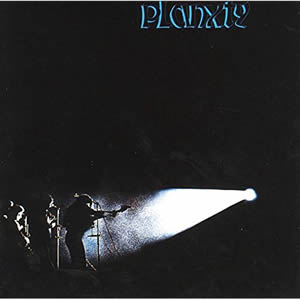
🎤 Featured Artists: Planxty
💿 Album: Planxty
Released: 1973
Country: Ireland
Format: 12" Vinyl
Label: Polydor